Budgeting to Achieve Financial Stability
Learn how to make a household budget that helps you save money and avoid debt.
A good personal budget gives you the foundation you need to build a healthy financial outlook. Budgeting is essential if you want to avoid overspending that leads to credit card debt. It also helps you save money effectively to achieve your financial goals. This guide is designed to help you build an effective household budget, so you can balance your income with your expenses. It also offers some helpful tips on financial planning for key life events, so you can maintain stability long-term.
|
If you’re having trouble managing credit card debt, we can help. Talk to a trained credit counsellor to find solutions that will work for your budget. |
Free Evaluation |
Budgeting basics
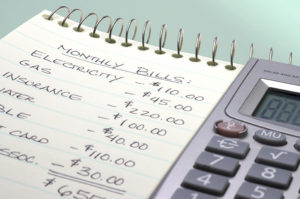 The goal of any budget is to balance your monthly expenses with your income, so you can avoid overspending. This starts by totalling up what you make each month and what you spend. Although you may think that you can keep everything organized in your head, it’s important to write things down to get a detailed picture of where your finances really are.
Totalling up your income
Monthly income can include more than what you receive from your paycheques. It can also include other sources of income, such as child or spousal support, money from a side business, freelance work, government benefits, public assistance, and (ideally) investment income.
Living below one's means is never easy, but doing so is ideal to avoid getting into unnecessary debt. – Nancy Kim, EnSquaredAired Click To TweetThis free worksheet can help you total up your monthly income »
Understanding your monthly expenses
Personal expenses fall into three groups:
- Fixed
- Flexible
- Discretionary
Fixed expenses
This type of expense refers to any necessary cost that has a set monthly payment. This includes:
- mortgage or rent payments
- real estate taxes
- auto loan payments
- student loan payments
- insurance payments
Flexible expenses
These expenses also cover necessities, but they have no set cost. Flexible expenses include bills that vary in cost from month-to-month, as well as expenses for other necessities. This includes:
- hydro/gas/oil bills
- electricity bills
- phone/internet/cellular bills
- groceries
- gas and other transportation costs
- household supplies
- self-care products and toiletries
- pet expenses
- medical expenses
For flexible expenses like bills, you may want to look at your annual bills and choose the highest amount to ensure you can cover that expense every month. For expenses like groceries and transportation costs, you can set a spending target by taking an average of what you spent over the past three months. Then, you work to stay below that target each month.
Discretionary expenses
These refer to your “wants.” It’s anything that’s a nice-to-have in your budget that’s not a necessity. This includes:
- entertainment expenses
- clothing
- dining out / take out
- gifts
- tithing and donations
- subscriptions
Where does credit card debt fit in?
 Credit cards are revolving debt, which means the required monthly payment changes as your balance increases and decreases. This generally means that credit card bills count as a flexible expense, since the amount you pay may vary based on how much you charge in any given month.
However, if you owe have multiple balances that you’re working to pay off, you may decide to implement a debt reduction plan. In this case, you determine how much you can afford to pay towards your balances each month and then set that as a fixed cost. In this case, credit card bills become a fixed expense.
Use our free credit card debt worksheet to take stock of your debt »
Where does savings fit in?
 A common mistake that people make is to leave savings for whatever money they have left at the end of the month. However, this is a good way to ensure you never save anything. Unexpected expenses always arise, so if you really want to save money, you need to factor it into your budget.
A better way of ensuring that you save money consistently is to treat savings like a fixed expense. You look at your income and expenses to determine how much you can afford to save each month. Then you set that amount as fixed expense in your budget. You essentially treat your savings like a bill you pay yourself.
The first step is to find a good, no-fee chequing acount. – Kalleigh MacCormack, HowToSaveMoney Click To TweetBalancing your budget step-by-step
- Use our free worksheets to total up your income, expenses, and credit card debt.
- Subtract your total monthly expenses from your income.
- If you bring in more than you spend, then determine how much you want to set aside each month for savings; set this as a fixed expense in your budget.
- If you spend more than you earn, you need to identify ways to cut back.
- Look at your discretionary expenses first:
- Can you limit your media, TV, movie or music streaming services?
- Can you scale back dining out and cook more at home instead?
- Do you have magazine subscriptions you can cancel?
- Are there services, like cleaning or landscaping, that you can cancel and do yourself?
- Also consider how to scale back on flexible expenses:
- Can you cut features from your cellular plan?
- Are you overspending on groceries, household supplies or pet supplies?
- Have you looked at ways to save on home energy costs or car costs?
What does a balanced budget look like?
A balanced budget doesn’t mean that you break even. If you spend everything you earn, it means you’re living paycheque-to-paycheque, which is extremely risky. Instead, you want to give yourself some breathing room. Ideally, you should spend no more than 75 per cent of what earn each month. The remaining 25 per cent is known as free cash flow.
It’s important to note that free cash flow is separate from savings. Your savings is treated like a fixed expense as we describe above. By contrast, free cash flow is the money you use to cover all those unexpected expenses that inevitably arise.
Evaluating your budget and making adjustments
Once you set your budget, you can’t just forget it! Instead, you need to regularly check back to make sure your spending falls in line with the targets you set. If it doesn’t, then you may need to review your budget to find places you can cut back.
You should also revisit your budget anytime there’s a change in your financial situation. This includes adjusting your budget if your salary increases or decreases, as well as if you have a new expense. If you get a new pet, you need to increase your monthly pet expenses. If you add a steaming service, add it to your budget.
Finally, you want to review your budget once per year to make sure it’s still balanced to help you achieve your goals. Some people choose to do this at the beginning of the year as they’re setting goals for the New Year. Others choose to do their annual review in fall after their children head back to school and before the expenses of the winter holidays. Find a time of the year that fits your lifestyle and goals, then commit to reviewing your budget at the same time every year.
Do you have the right money mindset?
One thing to consider about as you start budgeting and taking control of your finances is how you think about money. Your attitudes about budgeting, saving, debt and daily money management have a big impact on your ability to achieve financial success. Learn how your perspective affects your finances and what you can do to make sure you have the right mindset to achieve the success you want.
Budgeting for expensive yearly events
A household budget can help you stay on track to avoid overspending at normal times of the year. However, there are certain events throughout the year that fall outside your normal budget. These events often lead to overspending and credit card debt, unless you plan ahead.
Vacation budgeting
Roughly 90 per cent of people admit that they use credit cards to cover some or all of their vacation expenses. When getting away leads to credit card debt, it takes away from the benefits of vacationing because it increases financial stress. For a truly relaxing getaway, you need to plan ahead, so you can pay off credit card reservations quickly and avoid vacation debt as you travel.
Learn how to build a vacation budget you can afford »
Holiday budgeting
The winter holidays are the most expensive time of year for most families. Between gifts, decorations, family meals, travelling and house guests, it’s easy to go overboard and start charging on your credit cards. Avoiding holiday debt takes careful planning and saving, so you can spread out costs throughout the year find smart ways to save.
Build a holiday budget to avoid end-of-year credit card debt »
Financial planning for major life events
Once you’ve learn how to budget and maintain financial stability throughout the year, the next step is to start financial planning for key life events. Achieving major life goals and key milestones takes planning. You should make a financial plan for events that you know you want to accomplish, like getting married and having kids. You also need to plan for the unexpected, such as divorce, natural disasters, and unemployment – all of which can throw off your budget, drain your savings and lead to debt.
The guides below can help you build effective budgeting strategies to save for key life events.
Investing to achieve your financial goals
A key part of financial planning involves investing your money wisely so it can grow. In order to achieve all the major milestones that you want to achieve in life, you’re going to need money to fund them. Investing allows you to make your money work for you, so you have the capital you need to succeed and maintain stability long-term, regardless of any life challenges you may face.
Learn how to start investing in your future »
Planning for retirement
Planning for retirement is essential if you ever want to stop working and enjoy your golden years. Canadians have a variety of tools that help you save and invest in your future. This guide will teach you how to plan effectively for retirement, so you can retire on time and debt-free.
Make a retirement plan that works for your budget »
Getting your finances ready for marriage
Budgeting on your own can be challenging enough, but when you blend your finances with someone else, it only makes it more difficult. Before you head down the aisle, you need to have some important conversations about money. You also need to get on the same page with how much you want to spend on the wedding. This guide explains everything you need to do to ensure that your finances are ready for marriage.
Start your financial life together the right way »
Financial planning for a growing family
It’s no secret that kids are expensive. Starting a family is exciting, but it’s also tough on your budget. The good news is that there are steps you can take to get your finances ready for having kids. With the right plan, you can ensure you can support a growing family, even if you face challenges, like limited income.
Start a family on the right financial foot »
Planning for single parents
Single parents face a unique set of challenges when it comes to managing the family finances. As the sole breadwinner, it can be tough to give your children everything they need and want without stressing the household finances. This guide offers tips to help single parents understand the challenges they face, so they can overcome them.
Managing your finances as a single parent »
Handling your finances during divorce
Divorce can be tough on your finances, but there are steps you can take to ease the transition. This guide teaches you how to navigate a divorce to keep your finances on the right course as you separate. In five simple steps you can prepare to establish a stable financial outlook on your own.
Get your finances ready for divorce »
Dealing with the death of a spouse
When you lose your life partner, taking on the full weight of your household finances on your own can be overwhelming. This guide can help you understand how to get organized, take stock of your accounts and set up a plan that will help you maintain stability as you move forward.
Addressing your finances after the death of a spouse »
Talking with your ageing parents about money
As your parents get older, it’s vital to talk about their finances to ensure they’re protected, and that everything runs smoothly during their golden years. Seniors face some unique financial challenges and need to be aware of certain risks, such as elder fraud. This guide can help you have the right conversations about money and estate planning with your parents.
Money management for women

Good budgeting and financial planning skills are key, regardless of your gender. Still, women face a unique set of challenges when it comes to finance. Women live longer, earn less, and face additional financial burdens, such as leaving the workforce to have children. With that in mind, Consolidated Credit has created a guide to help women find their financial footing in an often-imbalanced world.
|
Do you still have questions about how to budget effectively? Ask our financial coaches now to get the answers you need. |
Ask a Question |
Reviewed by :